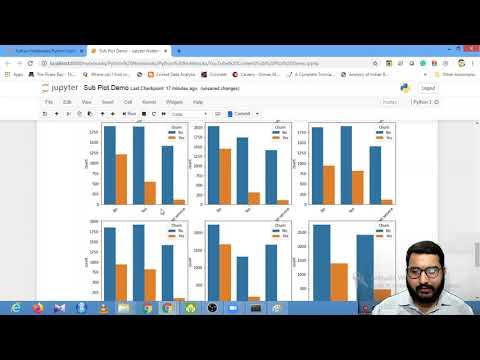
Data exploration is the initial step in data analysis. Data exploration can use a combination of manual methods and automated tools such as data visualizations, charts, and diagrams. One of the important diagrams is a Bar Plot and is widely used in many presentations.

Bar plot represents data in rectangular bar with heights proportional to the values that they represent. It is used to compare things between different groups or to track changes over time. It shows the relationship between a numeric and a categorical variable. It can also display values for several levels of grouping.

The bar graphs are best when the big changes in data over time. For the first example, you'll need to filter the dataset so only product A is shown. The reason is simple – ggplot2 uses stacked bar charts by default, and there are two products in the stack for each quarter. You'll learn how to add labels for multiple stacks later, but let's start with the basics.
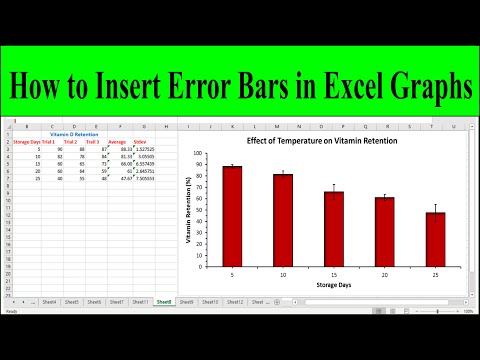
Here in this post, we will see how to plot a two bar graph on a different axis and multiple bar graph using Python's Matplotlib library on a single axis. A multiple bar chart is also called a Grouped Bar chart. A Bar plot or a Bar Chart has many customizations such as Multiple bar plots, stacked bar plots, horizontal bar charts. Multiple bar charts are generally used for comparing different entities. In this article, plotting multiple bar charts are discussed.
Stacked bar charts are a common chart type for visualization tools, as they are built upon the ubiquitous standard bar chart. Tools may also put the stacked bar chart and grouped bar chart together, with an option to choose between them. Another common option for stacked bar charts is the percentage, or relative frequency, stacked bar chart. Here, each primary bar is scaled to have the same height, so that each sub-bar becomes a percentage contribution to the whole at each primary category level.
This removes our ability to compare the primary category levels' totals, but allows us to perform a better analysis of the secondary groups' relative distributions. The fixing of the heights of each primary bar to be the same also creates another baseline at the top of the chart where a second subgroup can be tracked across primary bars. When a stacked bar chart is not a built-in chart type for a tool, it may be possible to create one by generating multiple bar charts on top of one another. This is where computation of cumulative totals or addition of logic to handle negative values will be necessary. R draws a fill line between products' values, as stacked bar charts are used by default. When there is only one bar to be plotted, a pie chart might be considered as an alternative to the stacked bar chart.
However, you should try not to use a pie chart when you want to compare two or more primary groups, as is normally the case with a stacked bar chart. Since pie charts generally do not have any tick markings, it can be more difficult to gauge accurate proportions both within and between pies. Pie charts are also limited to relative or percentage comparisons, rather than absolute values. In addition, multiple stacked bar charts will tend to take up less space than multiple pie charts, allowing for an easier view of the full data. Simple bar graphs are a very common type of graph used in data visualization and are used to represent one variable.

They consist of vertical or horizontal bars of uniform width and height proportional to the value of the variable for certain groups. The space between two bars in a simple bar graph must be uniform. The height or length of a bar can represent, for example, frequency, mean, total or percentage for each category/group of a variable. A bar graph is a chart that plots data using rectangular bars or columns that represent the total amount of observations in the data for that category.
Bar charts can be displayed with vertical columns, horizontal bars, comparative bars , or stacked bars . We can plot multiple bar charts by playing with the thickness and the positions of the bars. The data variable contains three series of four values.

The following script will show three bar charts of four bars. Each bar chart will be shifted 0.25 units from the previous one. The data object is a multidict containing number of students passed in three branches of an engineering college over the last four years. A bar chart or bar graph is a chart or graph that presents categorical data with rectangular bars with heights or lengths proportional to the values that they represent. A vertical bar chart is sometimes called a column chart. In this Python visualization tutorial you'll learn how to create and save as a file multiple bar charts in Python using Matplotlib and Pandas.

We'll easily read in a .csv file to a Pandas dataframe and then let Matplotlib perform the visualization. As a bonus you'll also learn how to save the plot as a file. A multiple bar graph is used to portray the relationship between various data variables. Basically, multiple bar charts are used for comparing different entities. You can create bar charts in Chart.js by setting the type key to bar.

By default, this will create charts with vertical bars. A Marimekko chart is essentially a square or rectangle that has been split into a stacked bar chart in two sequential directions. Compared to the standard absolute value stacked bar chart, each of the primary bars will now have the same length but different widths.

Stacked bar charts, by their nature, suggest following the same best practices as the standard bar charts they are built up from. However, the addition of a second categorical variable brings additional considerations for creating an effective stacked bar chart. The main objective of a standard bar chart is to compare numeric values between levels of a categorical variable.

One bar is plotted for each level of the categorical variable, each bar's length indicating numeric value. A stacked bar chart also achieves this objective, but also targets a second goal. A multiple bar plot is plot that has multiple bars for each category.

In this, we can compare as many sets of data you want. The process for creating a multiple bar graph is the same as creating any other bar graph, only you will have to set different colors to represent different sets of data. Bar graphs/charts provide a visual presentation of categorical data. Categorical data is a grouping of data into discrete groups, such as months of the year, age group, shoe sizes, and animals. In a column bar chart, categories appear along the horizontal axis and the height of the bar corresponds to the value of each category.

With stacked bar charts we need to provide the parameter bottom, this informs matplotlib where the bar should start from, so we will add up the values below. The stacked bar chart is one of many different chart types that can be used for visualizing data. Learn more from our articles on essential chart types, how to choose a type of data visualization, or by browsing the full collection of articles in the charts category. When the primary categorical variable is derived from a continuous feature, such as periods of time, we have the option of using a stacked area chart rather than stacked bars. Stacked areas tend to emphasize changes and trends rather than exact numbers, and it is much cleaner to read when there would otherwise be a lot of bars to plot.
In addition, an area chart's connected nature helps to emphasize the continuous nature of the primary variable. Let's plot a multiple bar chart graph and compare values with one another by targeting the rows one by one. By giving different colors like green, blue and red to each category' you can add your own desired colors. We can put them under comparison to each other now in a horizontally stacked cluster to see which category stands where. The xticks function from Matplotlib is used, with the rotation and potentially horizontalalignment parameters. They are very useful for data visualizations and the interpretation of meaningful information from datasets.

Here we are going to create multiple bar charts by using the DataFrame object of Pandas. Here we are going to plot multiple bar charts side by side. The ggplot2 package uses stacked bar charts by default. Stacked bar charts are best used when all portions are colored differently. Alternatively, a stacked bar chart stacks bars on top of each other so that the height of the resulting stack shows the combined result.

Stacked bar charts are not suited to data sets having both positive and negative values. When the secondary values are consistently positive or negative for each subgroup, it is easy to maintain a consistent ordering of sub-bars within each primary bar. In cases like this, it might be best to consider a different chart type for the data. A line chart or grouped bar chart can provide a more consistent display of individual groups, although they lose the ability to see the primary totals.

If seeing a total is truly important, that can always be shown in an additional plot – don't feel as though you need to show everything in a single plot. For certain tools, an intermediate step for creating a stacked bar chart may require computing cumulative sums across each row. The right-most column will contain the lengths of the primary bars. Sub-bars are defined by the differences in values between consecutive columns. For tools that require this kind of data table structure, beware of negative values since this can cause overlaps or gaps between bars that misrepresent the data. The unstacked bar chart is a great way to draw attention to patterns and changes over time or between different samples (depending on your x-axis).

It especially counts in a situation when we have a lot of bars, and sometimes, we can even get a deceptive impression and come to an incorrect conclusion. Then plt.bar() function is used to plot multiple bar charts. In this example we will see how to plot multiple bar charts using matplotlib, here we are plotting multiple bar charts to visualize the number of boys and girls in each Group.

In this tutorial, we have covered all the major aspects of line charts and bar charts in Chart.js. You should now be able to create basic charts, modify their appearance, and plot multiple datasets on the same chart without any issues. In the next part of the series, you will learn about the radar and polar area charts in Chart.js. Today you've learned how to make every type of bar chart in R and how to customize it with colors, titles, subtitles, and labels.

You're now able to use bar charts for basic visualizations, reports, and dashboards. Bar graphs can also be used for more complex comparisons of data with grouped (or "clustered") bar charts, and stacked bar charts. One way of alleviating the issue of comparing sub-bar sizes from their lengths is to add annotations to each bar indicating its size. This adds a bit more visual clutter, however, so be careful about whether or not it is used. Make sure that the stacked bar chart is in alignment with your primary goals for the visualization, or otherwise choose a different chart type. Just like the standard bar chart, the bars in a stacked bar chart can be oriented horizontally as well as vertically .
The horizontal orientation serves the same benefits as before, allowing for the easy display of long category levels without rotation or truncation. One important consideration in building a stacked bar chart is to decide which of the two categorical variables will be the primary variable and which will be the secondary . We want to move to a stacked bar chart when we care about the relative decomposition of each primary bar based on the levels of a second categorical variable. Each bar is now comprised of a number of sub-bars, each one corresponding with a level of a secondary categorical variable. The total length of each stacked bar is the same as before, but now we can see how the secondary groups contributed to that total.

The stacked bar chart extends the standard bar chart from looking at numeric values across one categorical variable to two. Each bar in a standard bar chart is divided into a number of sub-bars stacked end to end, each one corresponding to a level of the second categorical variable. If you select more than one column, Pandas creates, by default, an unstacked bar chart with each column forming one set of columns, and the DataFrame index as the x-axis.

As the name suggests, stacked bar plots have each plot stacked one over them. As we saw earlier that we had used an unstacked bar chart for the comparison of each group, we can use a stacked plot for the comparison of each individual. In pandas, this is easy to implement using the stacked keyword. Plot.bar() method is used to create multiple bar charts. The Men and Women data for multiple bar charts are taken into a list for easy plotting. You can also create horizontal bar charts with Chart.js.

Since they look very similar to regular vertical bar charts, all you need to do is set the value of the indexAxis key to y. It is a powerful python library for creating graphics or charts. It takes care of all of your basic and advanced plotting requirements in Python.
It took inspiration from MATLAB programming language and provides a similar MATLAB like interface for graphics. The beauty of this library is that it integrates well with pandas package which is used for data manipulation. With the combination of these two libraries, you can easily perform data wrangling along with visualization and get valuable insights out of data. Like ggplot2 library in R, matplotlib library is the grammar of graphics in Python and most used library for charts in Python.

This tutorial outlines how to perform plotting and data visualization in python using Matplotlib library. The objective of this post is to get you familiar with the basics and advanced plotting functions of the library. It contains several examples which will give you hands-on experience in generating plots in python. If comparing the sub-groups is important, then a different chart type like the line chart or grouped bar chart is warranted.
If we want to see the change in a secondary level across the primary categorical variable, this can only be easily done for the level plotted against the baseline. For all other secondary levels, their baseline will experience shifts, making it more difficult to judge how the sub-bar lengths change across primary bars. In the below example, it can be difficult to tell that the central yellow group is actually decreasing slightly over time.